
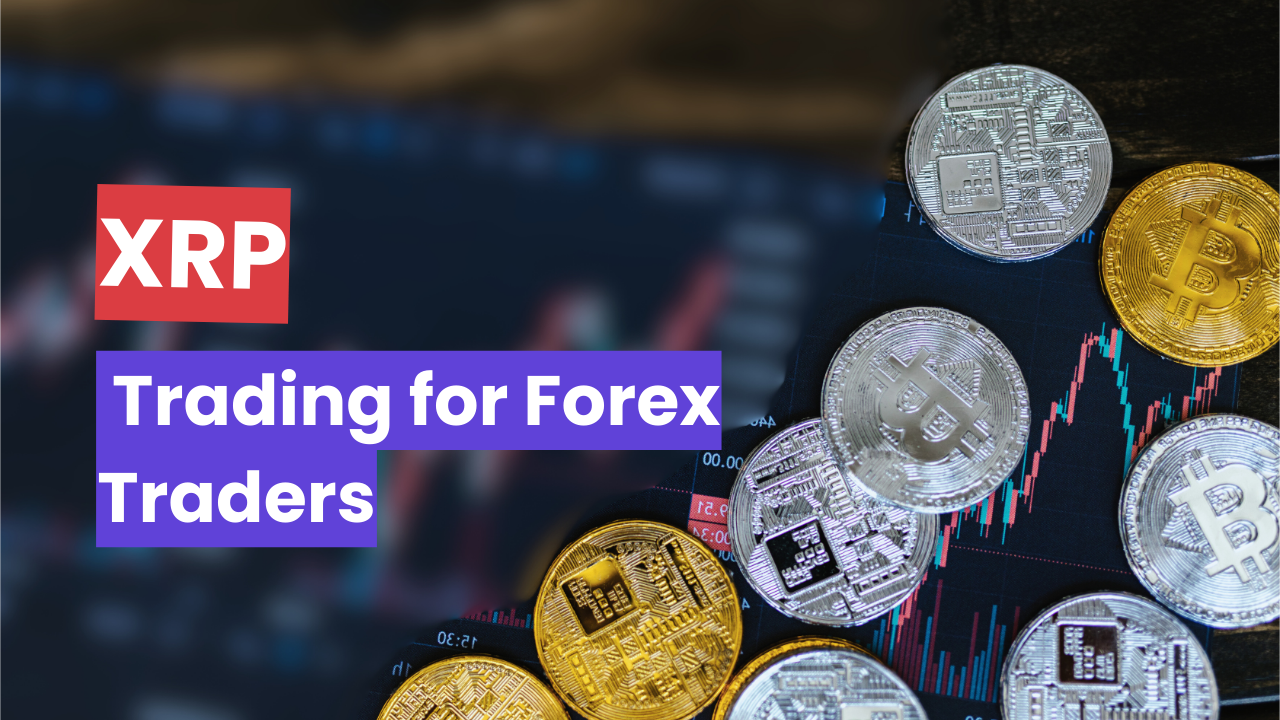


For forex traders navigating the 2026 market, understanding Ripple (XRP) and its place in the evolving trading landscape is crucial. Once a niche, cryptocurrency is now a legitimate asset class, and XRP, with its unique utility, increasingly appeals to those with a forex background seeking diversification and new opportunities. This guide explores XRP trading and the best platforms available.
1. Ripple (XRP) Trading: Appeal to Forex Traders in 2026
What is Ripple (XRP)?
Ripple (XRP) is the native digital asset of the XRP Ledger, an open-source, permissionless, and decentralized blockchain technology. It’s designed specifically for fast, low-cost, cross-border payments, acting as a bridge currency that can be exchanged between any two currencies or assets. Think of it as a super-efficient digital intermediary for moving value globally.
Why Ripple? Understanding XRP’s utility in cross-border payments.
International payments can be slow, expensive, and complex, often involving multiple correspondent banks. This is where XRP shines. Its primary utility is to facilitate near-instantaneous and incredibly cheap transfers, making it a compelling alternative for financial institutions and payment providers looking to optimize their liquidity and speed up transactions. The underlying technology, the XRP Ledger, can settle transactions in 3-5 seconds, a far cry from the days or even weeks traditional wire transfers used to take. By 2026, we’ve seen significant adoption, even with some past regulatory hurdles, proving its real-world application.
Bridging the Gap: Why forex traders are exploring crypto assets like XRP.
For us forex traders, the appeal is clear. We’re used to currency pairs, liquidity, and global economic drivers. Crypto assets like XRP, while different, share some common ground. The market is global, 24/7, and highly responsive to news and sentiment. The sheer volatility in crypto often translates to exciting trading opportunities that can be harder to find consistently in more mature, less dynamic forex pairs. Plus, it’s a chance to diversify our portfolios beyond traditional fiat currencies. After the regulatory clarity that started emerging a couple of years back for XRP in particular, it feels a bit less like a gamble and more like an established, albeit newer, asset class.
Key Benefits of Trading XRP:
- Liquidity: XRP is consistently one of the top cryptocurrencies by market cap and trading volume. This means decent liquidity; though not on par with major forex pairs, it’s certainly sufficient for most retail traders to enter and exit positions without too much slippage on major platforms.
- Volatility: Crypto markets are known for wild swings. For intraday traders and scalpers, XRP’s volatility can offer significant profit opportunities, though it demands disciplined risk management.
- Diversification: Adding XRP to a traditional forex portfolio provides exposure to a different kind of asset, potentially hedging against risks in fiat currency markets or capitalizing on uncorrelated movements. It’s a way to spread your bets in today’s interconnected financial world.
2. Key Factors for Choosing the Best XRP Trading Platforms
Picking the right platform is critical, especially when you’re used to the rigorous standards of forex brokers. Here’s what to consider:
- Regulation & Security for XRP Trading Platforms: This is non-negotiable. Look for platforms licensed in reputable jurisdictions (e.g., US, UK, EU, Australia). Check for investor protection schemes (like insurance or segregated accounts), multi-factor authentication (2FA is a must), and robust cold storage solutions for client funds. We’ve seen enough platforms go belly-up or get hacked to know this isn’t a place to cut corners.
- XRP Availability & Trading Pairs Offered: Does the platform offer direct XRP trading or just CFDs? What pairs are available? XRP/USD is standard, but you might want XRP/EUR, XRP/BTC, or other cross-pairs for specific strategies. More pairs mean more flexibility.
- XRP Trading Fees & Spreads: Don’t just look at the headline numbers. Dig into trading commissions (maker/taker models), deposit/withdrawal fees (especially for fiat), and the spread itself. These can eat into profits, especially for active traders. Transparency is key here – no hidden charges.
- Advanced Trading Tools & Features: For a forex trader, advanced charting with a full suite of technical indicators is essential. Look for various order types (stop-loss, take-profit, OCO, trailing stops), and leverage options. Be careful with leverage though; it’s a double-edged sword in crypto’s volatile markets.
- Platform Reliability & Trade Execution: There’s nothing worse than your platform freezing during a volatile move. Check for high uptime, minimal slippage, and rapid order fulfillment. This dictates whether your strategy can actually be executed effectively.
- Deposit & Withdrawal Methods for Crypto: Can you easily fund your account with fiat (bank transfer, credit/debit card) and withdraw to it? What are the crypto deposit/withdrawal options? Fast and low-cost options are preferred.
- Customer Support & Responsiveness: When things go sideways (and they sometimes do), you need responsive, knowledgeable support. Look for 24/7 availability, multiple contact methods (live chat is great), and language options.
- User Experience (UX) & Mobile Trading: An intuitive interface and a reliable mobile app are crucial for managing trades on the go. Cluttered or buggy platforms are just frustrating and can lead to missed opportunities or errors.
3. Top 5 Ripple (XRP) Trading Platforms for Forex Traders in 2026
Based on what’s available in 2026, and considering a forex trader’s needs, here are five platforms that stand out for trading XRP.
3.1. eToro – Best for Social Trading & Crypto/Forex Blends
- Overview: eToro has carved out a niche as a multi-asset brokerage with a strong social trading focus. It’s evolved into a regulated player offering everything from stocks and forex to crypto. It’s one of the more accessible platforms for those transitioning to crypto from traditional markets.
- Key Features: Its flagship “CopyTrader” feature allows users to automatically replicate the trades of successful investors. They also offer “Smart Portfolios” for thematic investments. For forex traders, the blend of traditional forex pairs alongside crypto assets like XRP is a huge plus.
- Regulation & Security: eToro is well-regulated, holding licenses from major bodies like the FCA (UK), CySEC (Cyprus), ASIC (Australia), and FINRA (US, for certain services). They employ robust security protocols and client funds are typically segregated.
- XRP Trading Options on eToro: You can trade XRP on eToro either as the underlying asset (in certain regions) or as a CFD. They offer XRP/USD, XRP/EUR, and a few other crypto crosses. Direct asset ownership is suitable for long-term holding, while CFDs allow leverage and shorting.
- Fees & Spreads: eToro operates on a spread-only model for crypto trading, meaning no separate commission. Spreads for XRP can be a bit wider than some pure crypto exchanges, often fluctuating with market conditions. They do have transparent overnight fees for leveraged CFD positions.
- eToro Pros: Very user-friendly interface, especially good for beginners. The social and copy trading features are unique and genuinely useful for learning or diversifying strategies. Strong regulatory backing and a wide range of assets make it versatile.
- eToro Cons: Spreads can be less competitive than dedicated crypto exchanges, especially during high volatility. Advanced charting tools are present but might not satisfy the most demanding technical analysts used to professional-grade software.
- Best For: Forex Traders on eToro: Beginners transitioning from forex, those interested in learning from or copying other traders, and anyone looking for a single platform to manage both traditional and crypto assets.
3.2. Binance – Best for High Liquidity & Extensive XRP Pairs
- Overview: Binance remains the titan of the crypto exchange world by trading volume, even in 2026. It’s a global powerhouse known for its vast selection of cryptocurrencies and advanced trading functionalities.
- Key Features: Binance offers spot trading, margin trading, futures contracts, options, and a host of other crypto-centric services. Their Launchpad, Earn products, and robust API make it a go-to for many.
- Regulation & Security: While Binance has faced regulatory scrutiny globally, by 2026, they’ve largely adapted, operating with specific regional licenses in many jurisdictions (e.g., Binance.US, Binance Japan, etc.). They maintain a large “SAFU” (Secure Asset Fund for Users) insurance fund to protect against hacks.
- XRP Trading Options on Binance: Liquidity for XRP on Binance is unparalleled. You’ll find a wide array of XRP pairs against fiat (like XRP/USD, XRP/EUR, XRP/GBP) and numerous cryptocurrencies (XRP/BTC, XRP/ETH, etc.). Both spot and derivatives trading are available, depending on your region.
- Fees & Spreads: Binance uses a tiered maker/taker fee structure, which generally gets lower the more you trade or if you hold their native BNB token. For active traders, these fees are highly competitive, often among the lowest in the industry. Spreads are tight due to deep order books.
- Binance Pros: Unparalleled liquidity, extensive selection of XRP trading pairs, very low fees for high-volume traders, and a comprehensive suite of advanced trading tools.
- Binance Cons: The platform can feel overwhelming for absolute beginners due to the sheer number of features. Regulatory nuances still exist across different regions, meaning not all services are available everywhere.
- Best For: Forex Traders on Binance: Experienced crypto traders, active day traders, and those prioritizing deep liquidity and low fees for large volumes. If you’re coming from a high-frequency forex background, this might feel familiar.
3.3. Kraken – Best for Professional Trading & Robust Security
- Overview: Kraken is one of the oldest and most respected cryptocurrency exchanges, known for its unwavering commitment to security and institutional-grade services. It’s a solid choice for serious traders.
- Key Features: Kraken offers advanced order types, margin trading, and futures trading (in eligible regions). Their “Kraken Pro” interface provides a powerful environment for detailed analysis and execution. They’re also known for their comprehensive staking options.
- Regulation & Security: Kraken has always prioritized regulatory compliance and security. They are a regulated bank in Wyoming (Kraken Bank) and have a strong track record of adhering to global financial standards. They regularly publish proof-of-reserves and utilize multi-layered security protocols.
- XRP Trading Options on Kraken: Kraken offers reliable and secure access to XRP trading, with pairs against major fiat currencies (XRP/USD, XRP/EUR, XRP/GBP) and other cryptocurrencies. Liquidity is excellent, though perhaps not as deep as Binance on some exotic pairs.
- Fees & Spreads: Kraken employs a competitive maker/taker fee schedule that scales with trading volume. Fees are reasonable, and their various funding options usually have transparent costs.
- Kraken Pros: Top-tier security and reputation, excellent for professional traders who need reliable execution and advanced features. Good customer support and a strong commitment to regulatory compliance are major pluses.
- Kraken Cons: The interface can be a bit less intuitive for absolute beginners compared to eToro. Onboarding can sometimes take longer due to their stringent KYC/AML checks, but that’s a small price for security.
- Best For: Professional Forex Traders on Kraken: Serious crypto traders, institutional clients, and anyone for whom security and regulatory compliance are paramount. If you appreciate a no-frills, professional trading environment, Kraken is a strong contender.
3.4. Capital.com – Best for CFD Trading Ripple with Tight Spreads
- Overview: Capital.com is primarily a CFD broker, but they’ve successfully integrated crypto CFDs alongside their vast array of forex, stock, and commodity CFDs. They’re heavily focused on technology and providing educational content.
- Key Features: Their platform boasts AI-powered trading insights to help identify potential biases, extensive educational resources, and a clean, intuitive trading interface. They offer zero commission on many CFD trades, making them attractive for active trading.
- Regulation & Security: Capital.com is highly regulated by bodies such as the FCA (UK), CySEC (Cyprus), and ASIC (Australia). They emphasize risk management tools like negative balance protection and segregated client funds.
- XRP CFD Trading on Capital.com: Capital.com offers XRP as a CFD. This means you don’t own the underlying XRP asset but speculate on its price movements. This is familiar territory for forex traders, as it allows for leverage and easy short-selling. They primarily offer XRP/USD and XRP/EUR CFDs.
- Fees & Spreads: Their main draw is tight spreads on XRP CFDs with no commission on trades. This can be very cost-effective for frequent trading. Be mindful of overnight swap fees, which are standard for leveraged CFD positions.
- Capital.com Pros: Highly regulated, very tight spreads on XRP CFDs, excellent educational tools, and a user-friendly mobile app. The AI-driven insights can be genuinely helpful. Great for forex traders looking to transition seamlessly.
- Capital.com Cons: Only offers CFDs, so you cannot take direct ownership of XRP. This means no staking or transferring XRP off the platform. Withdrawal fees for some fiat methods can be a slight drawback.
- Best For: Forex Traders Using XRP CFDs: Forex traders looking to trade XRP price action via CFDs, prioritizing tight spreads and a familiar trading environment. Great for those who value extensive educational support and a technologically advanced platform.
3.5. Coinbase Advanced – Best for Reliability & Regulated Access (US Focus)
- Overview: Coinbase, particularly its “Coinbase Advanced” platform (formerly Coinbase Pro), is the leading regulated crypto exchange in the US. It’s built for serious traders who need more than the basic Coinbase retail app but still want the rock-solid reliability and regulatory comfort the brand provides.
- Key Features: Coinbase Advanced offers institutional-grade trading tools, deep order books, competitive pricing, and a highly stable trading environment. It focuses on core spot trading pairs.
- Regulation & Security: Coinbase is one of the most regulated exchanges globally, especially in the US, holding various state licenses (like NYDFS BitLicense). They maintain extensive insurance coverage for USD balances, and their security infrastructure is top-tier. By 2026, with the past SEC clarity for XRP, their compliance status for listing XRP is well-established.
- XRP Trading Options on Coinbase Advanced: Post-2023 SEC developments, XRP is now fully available for trading on Coinbase Advanced in permitted US jurisdictions and internationally. You’ll find solid liquidity for XRP/USD, XRP/EUR, and some crypto-to-crypto pairs.
- Fees & Spreads: Coinbase Advanced operates on a maker/taker fee structure, which is significantly more competitive than the standard Coinbase retail platform, scaling down with higher trading volumes. Spreads are generally tight given the liquidity.
- Coinbase Advanced Pros: Unquestionable reliability and regulatory compliance, particularly for US-based traders. Excellent security features, a clean and professional trading interface, and good liquidity for major pairs like XRP.
- Coinbase Advanced Cons: Fees for smaller trades can still be higher compared to high-volume focused exchanges like Binance. While global, its deepest compliance and service offerings often cater more strongly to the US market, potentially limiting some features elsewhere.
- Best For: US Forex Traders on Coinbase Advanced: US-based traders, those prioritizing regulatory compliance, and traders who value a trusted, highly secure brand with a solid trading platform. If you’re trading from the US, this is often the go-to for peace of mind.
4. How to Trade Ripple (XRP): A Guide for Forex Traders
Transitioning from forex to crypto doesn’t change the fundamental steps of trading, but it’s worth reviewing.
- Step 1: Select a Regulated XRP Trading Platform. As discussed, this is paramount. Pick one from the list above or another that meets stringent regulatory and security standards.
- Step 2: Complete KYC/AML Verification. All legitimate platforms require Know Your Customer (KYC) and Anti-Money Laundering (AML) checks. This involves submitting ID, proof of address, etc. Get it done upfront to avoid withdrawal delays later.
- Step 3: Deposit Funds (Fiat or Other Cryptocurrencies). Decide how you want to fund your account. Most platforms accept fiat via bank transfer, credit/debit card, or e-wallets. If you already hold other crypto, you can often deposit that directly.
- Step 4: Navigate to the Desired XRP Trading Pair (e.g., XRP/USD). On the platform’s trading interface, find the XRP pair you wish to trade. It might be under a “Spot,” “Trade,” or “Markets” section.
- Step 5: Understand Key Order Types (Market, Limit, Stop-Loss). These are similar to forex.
- Market Order: Buy/sell immediately at the current best available price. Quick, but can incur slippage.
- Limit Order: Buy/sell at a specified price or better. Ensures you get your desired entry/exit, but might not fill immediately.
- Stop-Loss Order: An essential risk management tool. Automatically closes your position if the price moves against you to a pre-set level.
- Take-Profit Order: Automatically closes your position when the price reaches a profitable pre-set level.
- Step 6: Execute Your XRP Trade. Input the amount of XRP you want to buy or sell, select your order type, and confirm. Double-check everything before hitting that button.
- Step 7: Monitor Positions & Implement Risk Management. Once your trade is live, keep an eye on it. Use stop-loss orders. Don’t over-leverage, especially in crypto. Trailing stops can be useful for locking in profits as the market moves in your favor.
5. Risks Associated with Ripple (XRP) Trading for Forex Traders
While XRP offers exciting opportunities, it’s crucial to be aware of the inherent risks, some of which are amplified compared to traditional forex.
- High Volatility in Crypto Markets: Crypto markets are notoriously volatile. XRP can experience rapid and significant price swings in short periods. While this offers profit potential, it also means substantial losses can accrue quickly if the market moves against you.
- Evolving Regulatory Landscape: Even with the clarity that emerged around XRP in recent years, the broader crypto regulatory landscape is still evolving globally. Sudden shifts in government policy or new interpretations of existing laws can heavily impact market sentiment and price. Keep an eye on global headlines.
- Potential for Market Manipulation: While less prevalent in highly liquid assets like XRP compared to smaller altcoins, the crypto market can still be susceptible to “whale” activity or pump-and-dump schemes, especially during periods of lower liquidity.
- Platform Security Risks & Hacking: Despite the best efforts of exchanges, the risk of hacking, phishing, or other security breaches always exists. While platforms have improved, no system is 100% impervious. This is why multi-factor authentication and choosing regulated platforms are so important.
- Leverage Risks & Margin Trading: Trading XRP CFDs or using margin on crypto exchanges amplifies both potential profits and losses. A small market movement can lead to a margin call or liquidation if you’re over-leveraged. Treat leverage with extreme caution.
6. Ripple (XRP) Trading FAQs for Forex Traders
- Q1: Can Forex Brokers Directly Offer XRP Trading?
A1: It depends on your broker. Some forex brokers, like Capital.com, have expanded their offerings to include crypto CFDs, including XRP. However, most traditional forex-only brokers do not offer direct crypto trading. You’ll likely need to open a separate account with a dedicated crypto exchange or a multi-asset broker that supports crypto. - Q2: Is XRP a Suitable Investment for Forex Traders?
A2: “Suitable investment” is subjective and depends entirely on your risk tolerance, trading strategy, and market outlook. For forex traders, XRP offers volatility and liquidity, which can be attractive for short-term trading. Its utility in cross-border payments gives it a fundamental backing, but it’s still a speculative asset. It can be a good trading asset for certain strategies, but assess it against your own portfolio goals. - Q3: XRP Ownership vs. XRP CFD Trading: What’s the Difference?
A3: When you buy XRP on an exchange like Binance or Coinbase, you own the underlying digital asset. You can then transfer it to a personal wallet, stake it (if the platform allows), or use it for payments. When you trade XRP CFDs (Contract For Difference) on platforms like Capital.com or eToro (in certain regions), you are speculating on XRP’s price movements without actually owning the asset. CFDs allow for leverage and easy short-selling, but you can’t withdraw the underlying XRP to a wallet. - Q4: How to Select the Best XRP Trading Pair?
A4: For most forex traders, XRP/USD is the most straightforward and liquid pair, offering direct exposure against the US dollar. If you trade in Europe, XRP/EUR might be more convenient for funding and withdrawals. XRP/BTC or XRP/ETH pairs can be useful if you’re looking to swap between cryptos, but they introduce additional volatility and factors from Bitcoin or Ethereum’s price action. Stick to the pairs with the highest liquidity for tighter spreads. - Q5: Ensuring Fund Safety on XRP Trading Platforms.
A5: Reputable, regulated platforms employ robust security measures like cold storage for funds, multi-factor authentication, and often carry insurance. However, no platform is 100% immune to all risks. It’s crucial to use strong, unique passwords, enable 2FA, and ideally, only keep funds you’re actively trading on an exchange. For long-term holdings, consider a hardware wallet. Do your own due diligence on the platform’s security history and regulatory status.
7. Conclusion: Making an Informed Choice for XRP Trading
Venturing into XRP trading from a forex background is a natural progression for many seeking new opportunities in today’s dynamic markets. XRP, with its unique utility and significant market presence, presents an interesting proposition.
The key decision factors discussed – regulation, fees, liquidity, tools, and security – should be your compass. There’s no single “best” platform; it truly depends on your individual needs. Are you a high-volume trader prioritizing low fees and deep liquidity? Binance or Coinbase Advanced might be your play. Looking for a user-friendly experience with social trading features? eToro could fit. If you’re accustomed to CFD trading and prioritize tight spreads, Capital.com is strong. And for unparalleled security and a professional environment, Kraken stands out.
Always remember the importance of due diligence. Read reviews, check their regulatory standing, and perhaps even test out a demo account if available. And critically, apply robust risk management. The volatility in crypto, while attractive, demands respect. Don’t over-leverage, always use stop-losses, and never invest more than you can afford to lose.
The crypto market, and XRP within it, offers a fantastic avenue for diversification and potential profit, especially now in 2026 with a clearer regulatory picture. But like all trading, it rewards preparation, discipline, and a healthy respect for the market’s inherent risks. Trade smart, stay safe.



Leave a Reply